
A furnace repair estimate leaves you with a practical question: is this repair worth the money, or would replacing the system be a better investment? The answer depends on the problem, the furnace’s overall condition, and how well it heats your home.
Repair is often a reasonable investment when the fault is isolated and the furnace can continue operating safely. Replacement deserves a closer look when a substantial repair comes with other equipment problems or when a different system would improve how the home is heated. For some El Cerrito households, that comparison also includes adding cooling with a heat pump.
This guide explains how those choices differ, what affects their cost, and how your home’s ducts and insulation enter the decision. Hassler Heating and Air Conditioning provides heating and cooling services in El Cerrito, including furnace service and heat-pump installation.
When Is a Furnace Repair Worth Paying For?
A successful repair restores dependable operation at a cost that makes sense for the equipment you will continue using. The diagnosis matters as much as the failed part. A furnace that will not ignite may have a straightforward component problem, but repeated shutdowns can involve an underlying condition that needs attention before another part is installed.
For example, replacing a failed igniter can be worthwhile when the rest of the furnace is in serviceable condition. If restricted airflow is causing overheating, the repair also needs to address the restriction. Otherwise, getting the burner to run again can leave the cause of the shutdown unresolved.
Repair history adds important context. Several service visits for the same unresolved complaint differ from unrelated repairs spread over many years. Routine maintenance is another expense entirely. Counting every tune-up as a breakdown can make a dependable system appear less reliable than it has been.
Facing a repair estimate? Hassler can assess your furnace, explain the work it needs, and discuss whether replacement is worth considering. Schedule furnace service or call (510) 288-5563.
A Blower Motor and a Heat Exchanger Raise Different Questions
The blower motor moves air through the furnace and ductwork. Its replacement cost depends on the equipment and motor involved, with warranty coverage affecting the parts portion of the bill. A motor failure alone does not establish that the entire furnace has reached the end of its useful life.
The heat exchanger transfers heat from combustion to the air circulating through the home while separating that air from combustion gases. Damage to this component requires a safety assessment. Replacing it can involve considerable labor, and the comparison should account for the condition of the furnace’s other components.
Manufacturer parts coverage may reduce a repair bill without covering all labor or related work. An expensive repair can still be reasonable in a well-maintained system; it becomes harder to justify when other substantial defects remain. Equipment found unsafe may need to stay off until it is repaired or replaced.
What Would Another Furnace Improve?
Replacing the furnace can be worthwhile when repairing one problem would leave you with several others. A new system may also address complaints such as noisy operation or uneven temperatures, provided the equipment is properly selected and the installation addresses their cause. The replacement proposal should explain which improvements you can reasonably expect.
Equipment selection also affects temperature control. Some furnaces adjust their heat output in stages or across a wider operating range. Those features can help match output to demand, but the results still depend on sizing, controls, installation, and air distribution.
Higher fuel efficiency is another possible improvement. Annual fuel utilization efficiency, or AFUE, describes how much of the fuel’s energy becomes useful heat over a heating season. It does not measure duct losses or predict a particular household’s utility savings. A higher rating therefore needs to be considered alongside the installed cost and expected use.
Age belongs in this discussion because it provides context for wear, parts availability, and likely future service. It cannot establish safety or repair value on its own. A furnace approaching 20 years of service deserves a careful evaluation, whether it has recently failed or still heats the house.
Hassler’s furnace installation services give homeowners an opportunity to compare suitable equipment with the cost of continuing to maintain the current furnace.
When Does Replacing a Furnace With a Heat Pump Make Sense?
A heat pump provides both heating and air conditioning. During winter, it draws heat from outdoor air and brings it inside. In summer, it removes heat from the home. Because it runs on electricity, it is also an option for homeowners who want to move away from gas heating.
Whether that switch makes sense depends partly on your existing air conditioner. If your home has no central AC, a heat pump can replace the furnace and add cooling. If both your furnace and air conditioner need replacement, you can compare a heat pump with installing a new furnace and AC system.
A newer air conditioner changes that calculation. Replacing only the furnace may allow you to keep cooling equipment that still works well, provided the components are compatible.
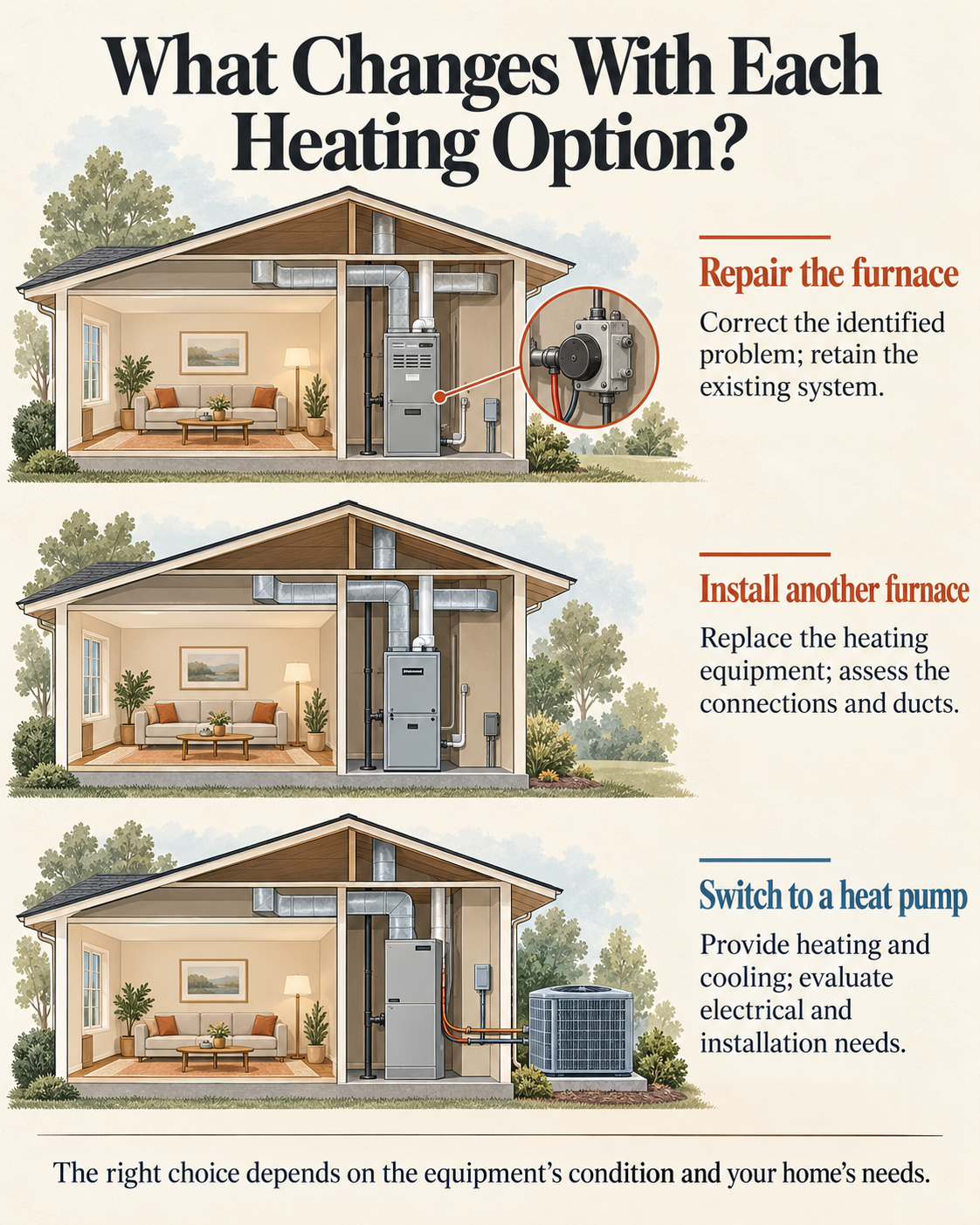
The Conversion Has Its Own Installation Requirements
A ducted heat pump includes an outdoor unit and compatible indoor equipment connected by refrigerant piping. The project also needs electrical connections and a suitable arrangement for condensate drainage. Outdoor placement affects access for service and the way equipment fits alongside the home.
Existing ducts may be usable, but their condition and airflow capacity need evaluation. Ductless heat pumps offer another approach where adding or modifying ducts would be difficult. ENERGY STAR’s heat-pump overview explains both ducted and ductless configurations.
Electrical work varies by property and selected equipment. A conversion can require a new circuit, while the need for a panel or service upgrade depends on available capacity and the home’s electrical loads. Panel replacement should follow that assessment. It is not an automatic part of every heat-pump installation.
Heating Can Feel Different After the Switch
Heat pumps generally deliver air at a lower temperature than gas furnaces. Depending on the model and conditions, they may operate for longer periods while maintaining the room temperature. That operating pattern can feel different to someone accustomed to short bursts of hotter air.
A comfortable result depends on selecting equipment that can meet the home’s heating requirements and distributing its output effectively. Compatible systems can also pair a heat pump with a furnace, an arrangement often called dual fuel. Whether retaining the furnace makes sense depends on its condition, the proposed controls, and the household’s goals.
Hassler provides heat-pump installation and service, including gas-to-electric conversions. Its El Cerrito heat-pump installation team can evaluate how a proposed system would fit the existing home.
Why the Condition of Your El Cerrito Home Matters
Many El Cerrito homes were built between 1940 and 1970, before California established minimum residential energy-efficiency requirements. In these homes, insulation and older ductwork can influence both comfort and the amount of heating needed.
A home that has received new windows, attic insulation, and air sealing may need less heat than it did when the existing furnace was installed. Replacing that furnace with another of the same capacity can overlook those improvements. Equipment selection should reflect the home as it is today.
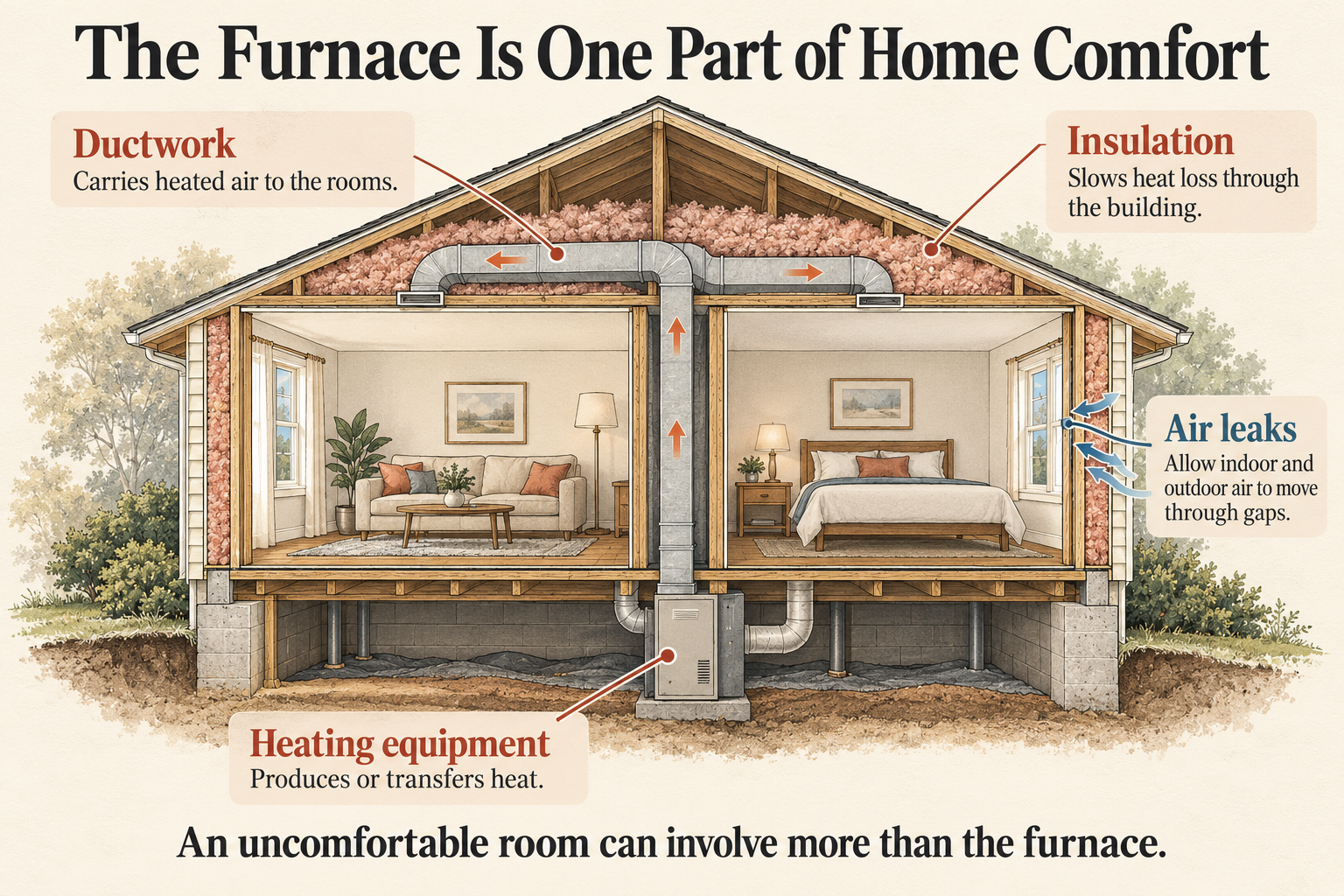
Where improvements are still needed, evaluating them alongside the heating system helps establish the full project. Duct repairs may improve air delivery, while insulation and air sealing reduce heat loss. Those findings can affect the equipment recommendation.
Hassler’s home-performance services include energy assessments and improvements to the home’s insulation and air sealing. These services can help connect an equipment recommendation to the comfort problem the homeowner wants solved.
How the Costs Compare Beyond the Initial Quote
Repair, furnace replacement, and heat-pump conversion cover different work. A repair addresses a problem in the existing system. Furnace replacement provides new heating equipment, while a heat-pump conversion can provide heating and cooling. Comparing the complete scope of each option makes the price difference easier to understand.
| Option | What the price covers | What may remain |
|---|---|---|
| Repair | Correction of the diagnosed problem and related work | Existing equipment and its remaining service needs |
| Furnace replacement | New heating equipment and necessary installation work | Retained ducts and any existing cooling equipment |
| Heat-pump conversion | Heating and cooling equipment plus conversion work | Distribution or building issues outside the project |
Installation Details Can Change the Total
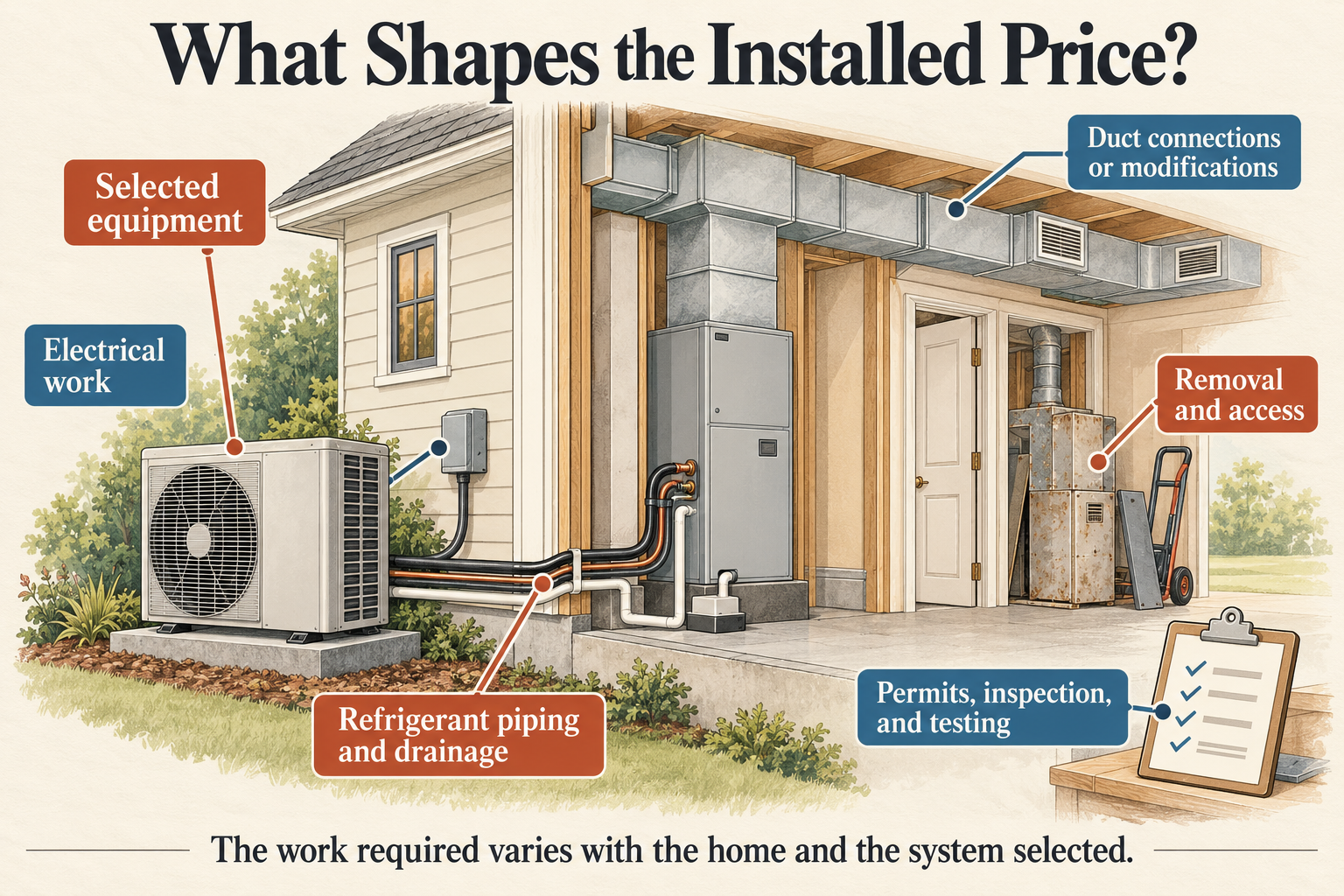
Equipment is only one part of an installed price. The amount of supporting work varies with the home, access, and the model selected. Difficult removal, changes to duct connections, or additional electrical work can make two apparently similar equipment proposals very different projects.
A new gas furnace, for instance, may need changes to venting or other connections. Condensing furnaces also produce water that requires drainage. A heat-pump conversion introduces refrigerant piping and outdoor equipment, with its own electrical and drainage requirements. These details explain why comparing the equipment names alone can be misleading.
Permits Are Part of the Installation
El Cerrito lists HVAC and furnace work among its permit categories. The Building Division also provides a furnace-and-AC checklist. Permitting, inspection, and applicable installation requirements form part of the project’s scope, with electrical changes potentially adding work.
Do Bay Area Rules Require You to Replace Your Furnace?
The Bay Area Air District’s equipment rules do not require you to remove a working gas furnace. Its guidance for homeowners confirms that functioning equipment can remain in service. A repair can still make sense when it restores safe, dependable heating.
The rules do affect future replacement options. The Air District’s current schedule requires furnaces manufactured beginning January 1, 2029 to meet a zero-NOx emissions standard. NOx means nitrogen oxides, pollutants produced by burning fuel. Electric heat pumps meet this standard because they heat the home without combustion.
For your repair-or-replace decision, the starting point remains the furnace’s condition and the work it needs. If replacement is the better option, the proposed equipment must meet the requirements that apply to your installation.
What Affects Your Potential Savings?
A new heating system can reduce energy use, but the savings depend on your home and the equipment you choose. The comparison should account for:
- Gas and electricity rates: When switching to a heat pump, heating costs shift from gas to electricity. Both rates matter when estimating the difference.
- The proposed equipment: Savings depend on how efficiently the selected system heats your home, including any backup heat it uses.
- Your home’s condition: Insulation, air leaks, and ductwork affect how much heating you need. Improvements can help the new equipment perform more effectively.
- How you use heating and cooling: Thermostat settings and hours of operation influence costs. If a heat pump adds air conditioning your home did not previously have, that cooling brings additional electricity use.
- Installation costs and qualifying incentives: The complete installed price, less confirmed rebates or other eligible incentives, establishes the upfront investment to compare with expected savings.
- Future repair expenses: Keeping the existing furnace means continuing to maintain its existing components. Replacement provides new equipment and warranty coverage, though maintenance remains necessary.
Financing options can help spread the upfront investment over time.
Furnace Repair and Replacement Questions
Is It Worth Repairing a 20 Year Old Furnace?
Sometimes. A small repair can be worthwhile if an inspection finds the furnace safe and otherwise in serviceable condition. A major repair is harder to justify when other expensive problems remain. Parts availability and warranty coverage also affect the comparison. At 20 years old, the furnace needs a careful assessment rather than a decision based on age alone.
Can a Heat Pump Replace a Gas Furnace Completely?
Yes. A heat pump can serve as the home’s heating system when the equipment and installation are designed to meet its heating needs. The design also determines whether supplemental heat is needed. Some households choose to retain a compatible furnace in a dual-fuel arrangement. Those are different system designs, so the proposed equipment and controls need to be clear.
Can the Existing Ducts Be Used With a Heat Pump?
Often, yes. The ducts need to be in good condition and able to carry the airflow required by the selected heat pump. Leaks, restrictions, or unsuitable duct sizes may require repairs or modifications. A ductless system is another option where using the existing ducts would be impractical.
Should the Furnace and Air Conditioner Be Replaced Together?
They do not always need replacement at the same time. A working air conditioner may remain if it is compatible with the proposed furnace and the overall installation. If both systems have substantial problems, a combined replacement or heat-pump conversion may be worth comparing. The age and condition of each system matter separately.
Will Switching to a Heat Pump Lower My Utility Bills?
Savings depend on the system being replaced, the selected heat pump, local energy rates, and how the home is used. A heat pump can use energy efficiently without guaranteeing a lower bill for every gas-heated household. An estimate tied to your existing usage and proposed equipment is more useful than a general savings percentage.
Compare Your Heating Options With Hassler
A good recommendation connects the repair findings to a clear picture of the alternatives. Hassler Heating and Air Conditioning has served local homeowners since 1999, with furnace, heat-pump, and home-performance services available from its El Cerrito base.
Whether you want to keep the furnace running or explore a different heating system, we can evaluate your equipment and discuss options for your home. Contact Hassler or call (510) 288-5563 to schedule an appointment.